Common Misconceptions about DFR Systems & the Benefits of Drones in Public Safety
.avif)
Drones are sophisticated, FAA-regulated tools being implemented by fire departments, police agencies, and emergency medical services across the country as part of Drone as First Responder (DFR) systems. In this article, we will debunk common myths about drone technology and provide insight into how and when these agencies are allowed to use drones in the United States.
Dispelling Common Misconceptions
Myth: "Drones are just toys.”
Truth: Paladin’s Public Safety drones are purpose-built vehicles with features such as thermal cameras, 5G/LTE service, and the ability to carry medical payloads. They operate under strict FAA Part 107 rules as well as agency-specific protocols.
Myth: "Drones are always watching you."
Truth: Deployed DFR systems launch only after a verified 911 call or dispatch event. Data retention policies, privacy guidelines, and public oversight boards prevent drones from recording or tilting cameras downwards until they arrive at an emergency.
Myth: "Drones replace officers and firefighters."
Truth: Drones don’t replace personnel, but act as a force multiplier, giving First Responders eyes and information before boots hit the ground and making every call safer and more efficient for everyone involved.
Myth: "Drones are too expensive to justify."
Truth: While getting started with DFR is no insignificant cost, agencies across the country have documented cost savings, reduced injuries, and faster case clearance rates after deployment. Deploying drones to the scene first helps avoid unnecessary vehicle dispatch and allows for more efficient operations and allocation of units when dispatch is needed. Paladin is currently offering a 30-day trial of our DFR program for only $8k— book a demo to see how DFR can transform your agency for only a fraction of the cost.
Myth: "Drone technology isn't reliable yet."
Truth: Modern Public Safety drones have wind resistance ratings up to 40+ mph, can operate in rain or snow, and include automated return-to-home failsafes. Agencies using Paladin DFR have logged over 30,000 miles, cleared over 50,000 calls, and responded to emergencies in 90 seconds on average.
Myth: "FAA rules make it too difficult to set up a drone program."
Truth: The FAA's BVLOS waiver pathway, combined with established Part 107 frameworks, have already enabled hundreds of agencies to operate legal, compliant DFR programs nationally. Paladin simplifies the FAA waiver process and takes care of all aspects of compliance to help Public Safety agencies get up and flying quickly. Don’t get bogged down by red tape— let us handle it.
Every Second is Critical
Every emergency call has a window, and during a medical emergency, structure fire, or violent crime in progress, the difference between intervention and aftermath can be seconds. A drone that arrives in as little as 90 seconds after a 911 call doesn't replace First Responders — it ensures that when they arrive, they already know exactly what they're walking into. This preparedness can mean units have necessary equipment ready and even deescalate a situation before anyone even reaches the scene. A drone streaming live video back to officers, firefighters, and dispatchers while ground units are still en route provides invaluable information to these agencies, and the results speak for themselves: Situational awareness and operational efficiency that was previously impossible.
DFR Implementation
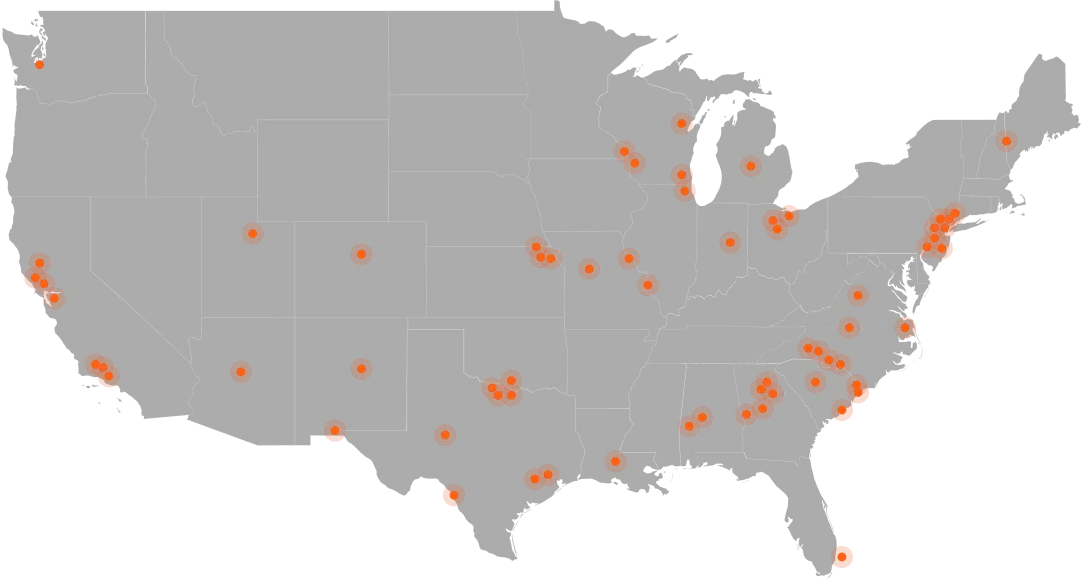
Implementing a successful DFR program typically requires a number of things, including the right equipment, proper FAA authorization, community support, implementation, training, and clear policy guardrails. With Paladin, the process is simplified. We provide our clients with equipment, training and implementation, FAA authorization and compliance, 24/7 support, and even help with presenting DFR to your agency’s city council. Join over 100 departments in the United States using Paladin’s DFR program and experience the life-saving technology earning its name as the future of First Response.