Employee Spotlight: Piyush Malpure
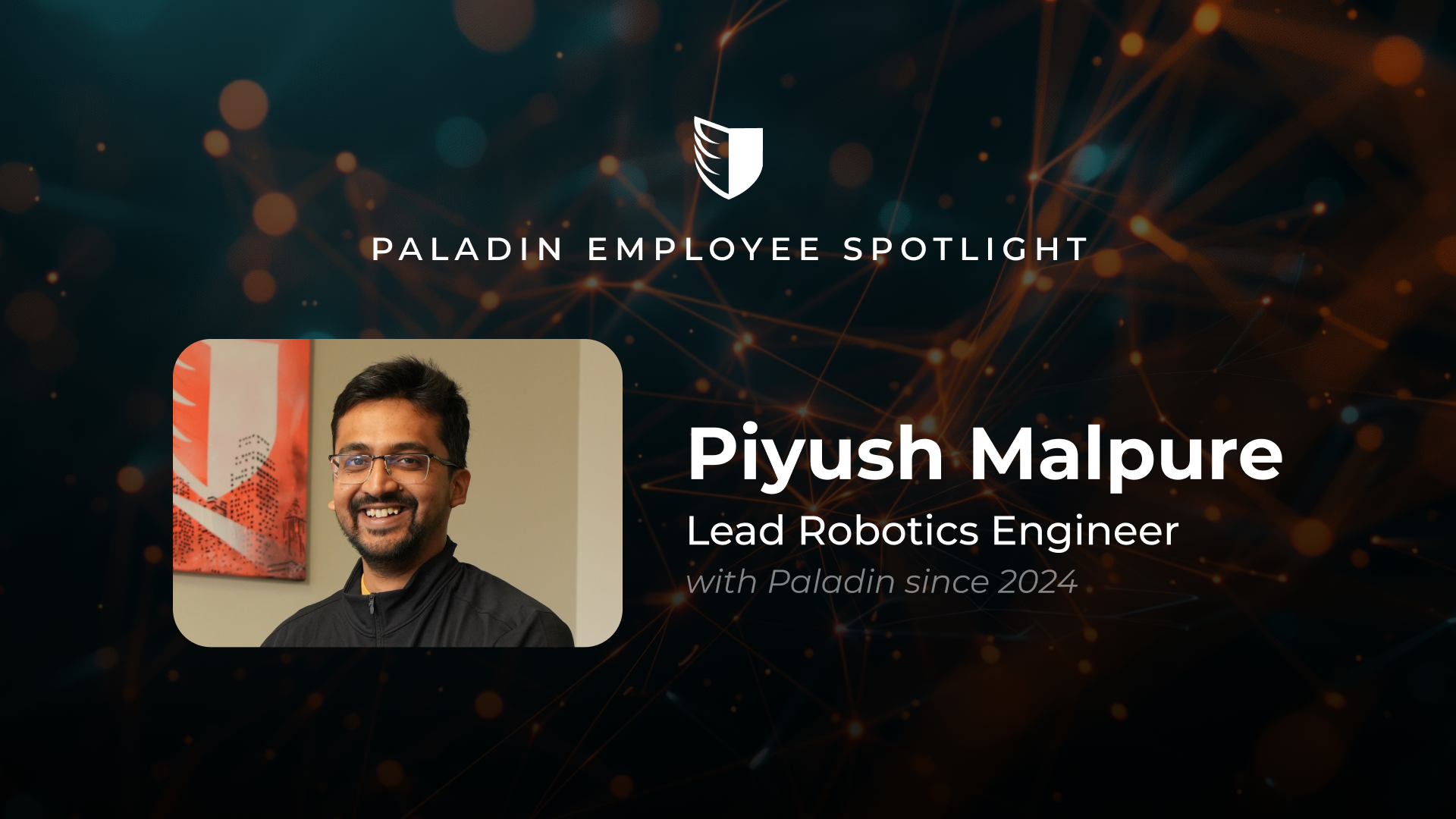
This week, we talked with Paladin's Lead Robotics Engineer Piyush Malpure about how his work directly impacts the agencies we serve and our most recent feature release: terrain follow. Originally from Pune, India and now living in Houston, Texas, Piyush has been an invaluable member of Paladin's engineering team since April of 2024.
What does it mean to be a Lead Robotics Engineer and how does your work directly impact the clients Paladin serves?
As a Lead Robotics Engineer at Paladin, my work is focused on building, reviewing, and improving the autonomy software that runs onboard our drones. That includes systems like path planning, geofencing, precision landing, return-to-home logic, terrain follow, and the overall software architecture that allows our drones to operate reliably in real-world public safety environments.
A big part of my role is ownership and accountability. I am one of the final people responsible for authorizing autonomy software releases before they go onto drones in the field, so every change that directly affects flight behavior, safety, landing, or operations has to be reviewed carefully. In a startup environment, that also means wearing multiple hats: defining what “acceptable behavior” looks like for a new feature, guiding the team technically, making final engineering decisions, building deployment pipelines, investigating field issues, and making sure each release makes the system more stable instead of introducing new risks.
The direct impact is that the code we write is not just sitting in a prototype, a lab, or a warehouse. It is deployed on drones that fly every day for Police and Fire departments. In DFR operations, First Responders need fast, reliable aerial awareness before units arrive on scene, and our autonomy systems help make that possible. When the drone can launch, navigate, respond to changing mission needs, and return safely, it helps give First Responders better situational awareness during time-sensitive emergencies.
What is terrain follow, and how is it useful for First Responders using DFR?
Terrain follow allows the drone to adjust its altitude based on the terrain it is flying over, instead of only maintaining a fixed altitude relative to the launch point. This is important because DFR flights do not always happen over flat, predictable areas. The drone may need to fly over changing elevation, hills, valleys, buildings, or different ground profiles depending on where an emergency is happening.
For First Responders, this makes autonomous flight more useful and safer in real-world environments. Police and fire departments may redirect the drone, change destinations, or take different routes based on how an incident evolves. Terrain follow helps the drone maintain safer clearance and more consistent behavior across those changing conditions, so first responders can focus on the emergency instead of worrying about the drone’s route.
What was a challenge the team faced when developing terrain follow?
A big challenge was testing the system across different elevation profiles and making sure we handled all the edge cases in the algorithm. Terrain follow is not just about getting the drone from one point to another. In real DFR operations, flights are controlled and redirected by police and fire departments based on what is happening in the moment. They may change destinations, take different routes, or respond to a situation that evolves quickly.
Because of that, the algorithm had to work reliably across many possible flight paths, not just a simple “go to a point and come back the same way” mission. We also had to update the low-battery return-to-home logic to account for terrain follow. The drone still needs to return safely even if the outbound route was changed, the destination moved, or the terrain profile is different on the way back. Making that behavior safe and predictable across all those cases was one of the key engineering challenges.
Another challenge is that every new autonomy feature has to fit into the larger operational system. It is not enough for the feature to work in one ideal test. We have to think about real flight routes, edge cases, battery behavior, deployment, field reliability, and how the feature interacts with existing systems like landing, geofencing, and return-to-home. That is what makes the work both difficult and important.
What’s the best part of your job?
The best part of my job is that the work has a very direct real-world impact. I get to write robotics and autonomy code that is deployed on a fleet of drones flying every day for First Responders. These are systems used by Police and Fire departments during real incidents, where faster information can help teams respond better and potentially save lives.
It is also meaningful because the responsibility is real. If there is a missed landing, a flight behavior issue, or a field reliability problem, it eventually comes back to the autonomy team, and often to me, to understand what happened and make the system better. That pressure can be challenging, but it is also what makes the job rewarding. Every release has to be more stable, every new feature has to handle more edge cases, and every improvement can directly affect how safely and reliably our drones support public safety operations.
We are not just building cool drone features; we are building tools that help First Responders see what is happening sooner, make safer decisions, and respond more effectively during emergencies. As an engineer, it is very rewarding to know that the software I work on can directly support public safety in the field.
Terrain follow is now available to all Paladin customers. For more information about our drone systems for First Responders, book a free demo with us today!