First Eyes on The Scene: How Fire Departments are Using DFR to Save Lives
.avif)
When a 911 call comes in for a structure fire, every second counts. As flames spread, smoke fills rooms and avenues for rescue close rapidly. Typically, First Responders are restricted by their ability to get to a scene before they can understand the scenario and develop a plan. Today, an increasing number of departments across the United States are closing that gap with innovative new technology: Drone as First Responder, or DFR.
Paladin’s DFR system is simple: drones are installed in key locations within the jurisdiction of a department, ready to be sent into action at a moment's notice. Deployed autonomously and manned remotely by trained personnel, these drones fly overhead and provide a livestream of the scene once they arrive, giving First Responders real-time aerial intelligence in as little as 90 seconds after a call comes in. Given that a fire doubles in size every 60 seconds after inception, getting eyes on the scene first provides invaluable awareness for First Responders.
Thermal Detection
For Fire Departments, the drone itself is only half of the equation. Paladin utilizes drones equipped with thermal detection technology, which senses and converts infrared radiation into a heat map that Firefighters can assess to determine their plan of action. Thermal imaging cuts through smoke, darkness, and dense landscapes, detecting even the smallest heat differences. When every second is critical, this heat map can be the difference that leads departments to successful missions.
Our M4TD drone boasts some impressive specs:
- Thermal sensitivity of ≤50 mK
- Thermal detection range of 0°C to 550°C in low gain mode
- Accuracy within a range of ±2°C
- 28x digital zoom
- Resolution of up to 1280 × 1024
Real-World Impact
DFR technology has been earning its name as the future of First Response through its real-world impact in agencies across the United States. One instance in Euless, TX serves as a strong example for the importance of drones in Public Safety. In January of 2026, Firefighters were dispatched to an apartment complex in Euless in the early hours of the morning after an apartment complex caught fire. A drone was automatically deployed to the scene and captured video of an intense fire breaking through the roof of the building. When crews arrived, they were informed that a 96-year old woman was trapped inside.
Due to the awareness gained from the aerial footage, the responding fire chief had already called for backup before their arrival because of the severity of the fire, meaning on-ground personnel were able to focus on their rescue with the knowledge that backup was already on the way. Because of their chief’s quick thinking and intel from a Paladin drone, they were able to rescue the woman swiftly before tackling the fire itself. At the time, Euless’ DFR program was only a few months old, already proving its value in time-critical operations.
The need for thermal imaging extends beyond house fires, however. In November of 2024, a 4-year old boy went missing in Tennessee after wandering away from his family into a dense, wooded area. Immediately after the call, a drone was dispatched to the scene. Manned by ground-units, the drone scanned the woods and assisted First Responders by surveying a large area for heat signals and movement. In under an hour, the boy was spotted on the drone’s live feed and returned safely to his family, having wandered about a half-mile away from where he disappeared. It was thanks to the combined efforts of First Responders and DFR that the boy was found quickly, leaving him with no injuries and making a safe return to his family.
Decreasing Risk for Firefighters
One of the less talked about benefits of drones for Fire Departments is enhanced Firefighter safety. With drones, firefighters don’t need to assume additional risk to access dangerous areas until they know whether or not it is safe or necessary. Drones reduce the risk of injury by identifying hotspots and structural instabilities from above, helping responders strategize with the full scope of the situation in mind. A Paladin drone can reach the scene in as little as 90 seconds, meaning units now have the opportunity to develop this strategy while in route and hit the ground running when they arrive. Firefighters risk their lives for the safety of their community every day— DFR can make sure that those who are brave enough to protect others are also protected and informed.
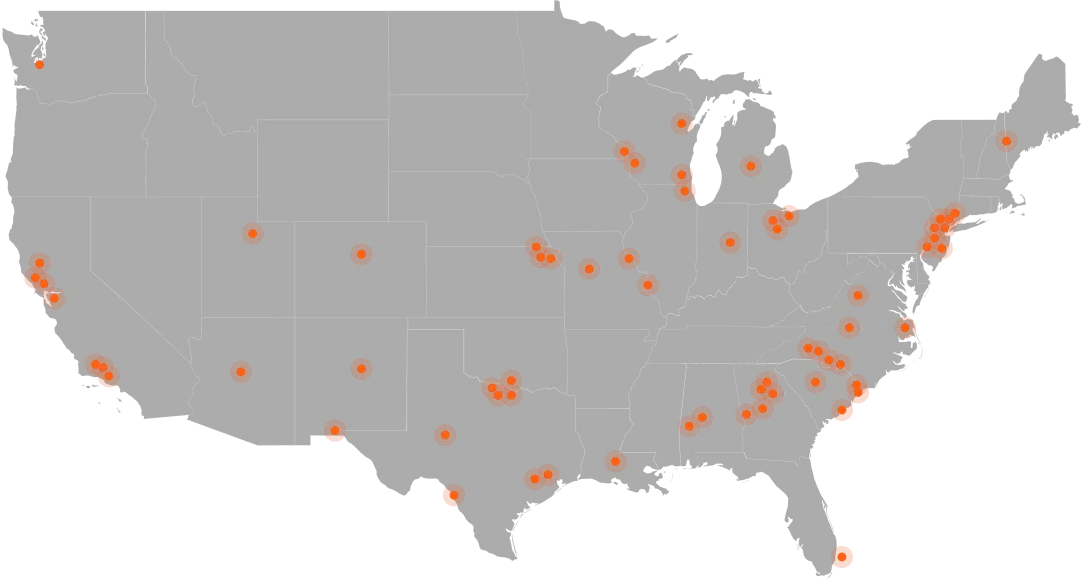
DFR programs are being implemented in agencies across the country, serving their agencies and communities to reduce risk, increase awareness, and ultimately, save lives. Paladin offers different DFR packages to fit your agency's needs, whether big or small. Book a demo with us to learn more about how your agency can benefit from Paladin’s Drone as First Responder program.